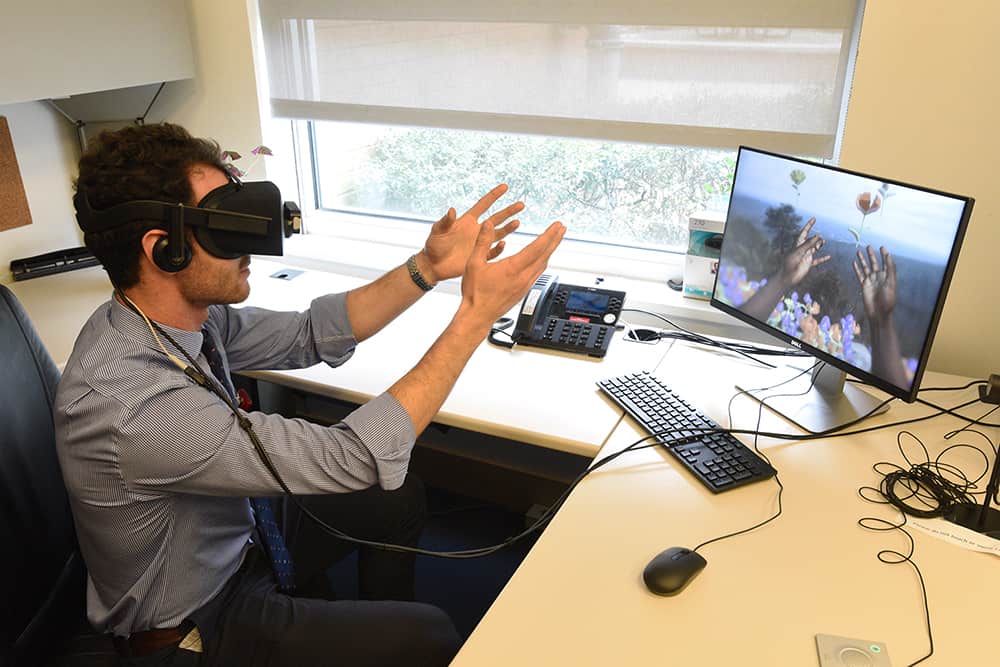
Virtual Reality (VR) immerses users in an entirely simulated digital setting. Compare this to Augmented Reality (AR) which overlays virtual objects in real-world surroundings. This difference provides users with complete immersion and absorption rather than a combination of real and virtual worlds. While desktop VR has been around for decades, easily accessed Immersive Virtual Reality (IVR) is a reasonably recent experience. Desktop VR and IVR have varying degrees of user participation in virtual worlds (Southgate, 2018).
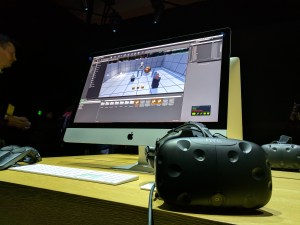
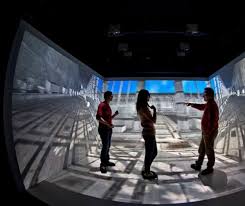
Research suggests that 3D Virtual Learning Environments can enhance spatial knowledge, facilitate experiential learning, connect virtual and real-life situations as well as motivate and engage learning (Dalgarno & Lee, 2010). Virtual Learning Environments (VLE) are also understood to develop creativity, increase student-led activities and focus on inquiry-based learning (De Freitas & Veletsiano, 2010).
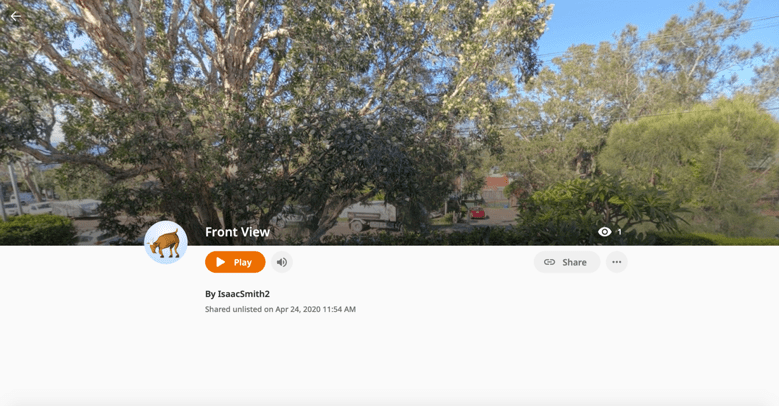
VR in education sees a move from teacher-centred to child-centred classrooms and the application of CoSpaces is a great tool for students to be introduced to VR experiences (Al-Gindy et al. 2020). CoSpaces allows students to develop their own virtual world through access to a large library of graphics. Students also are provided with the availability to upload backgrounds, images, audio, video and begin to code on the built-in platform of CoBlocks.
CoSpaces lets students take complete control over the development of their virtual world. Students can add a background from their own world to turn it into a virtual reality environment. However, CoSpaces requires explicit teacher instruction to be used appropriately and effectively. I developed a VR environment following explicit instructions from the EDUC3620 tutorial. Without instruction, I would have struggled to get everything uploaded correctly or understood how the platform-tools worked. This demonstrates that using CoSpaces in the classroom has both positives and negatives. Students need the correct skills to be productive and the learning tools to be beneficial.

References:
Al-Gindy, A., Felix, C., Ahmed, A., Matoug, A., & Alkhidir, M. (2020). Virtual Reality: Development of an Integrated Learning Environment for Education. International Journal of Information and Education Technology, 10(3).
Dalgarno, B., & Lee, M. J. (2010). What are the learning affordances of 3‐D virtual environments? British Journal of Educational Technology, 41(1), 10-32. https://doi.org/10.1111/j.1467-8535.2009.01038.x
De Freitas, S., & Veletsianos, G. (2010). Crossing boundaries: Learning and teaching in virtual worlds. British Journal of Educational Technology, 41(1), 3-9. https://doi.org/10.1111/j.1467-8535.2009.01045.x
Southgate, E. (2018). Immersive virtual reality, children and school education: A literature review for teachers. DICE Report Series Number 6. Newcastle: DICE Research. Retrieved from http://dice.newcastle.edu.au/DRS_6_2018.pdf


Hey there! I really enjoyed your blog post! I especially liked that you compared Augmented reality with Virtual reality in terms of classroom benefits. I agree that they both bring different levels of engagement to the classroom and that VR has the capacity to fully emerse students in a virtual environment, keeping them fully engaged. VR has really developed in previous years and i’m excited to see how it can possibly change the way we educate our students in the future. I also really enjoyed your cospaces creation and can see the capacity it has for learning in the classroom.
LikeLike
Hey Issac,
Great blog. I like that you compared virtual and augmented reality as thye can sometimes be confused. I agree with both your pros and cons on CoSpaces, while it’s a great app for constructing creativity, explicit teacher instruction needs to occur.
I am excited to see how Virtual reality is used in the classroom as when it is used correctly, student engagement and learning outcomes flourish. As long as the technology isn’t taking anything away from the pedagogical outcomes.
LikeLike