Young children are often told that they can play their video games after they have completed their homework. Research is beginning to shift towards a world where students can play games as a part of their homework. While some researchers say there is not enough evidence for games in educational learning, opposing opinions consider that a good game is a space for problem solving to create deeper learning and the potential for more positive outcomes to be met than in tradition learning methods (Mayer, 2019).
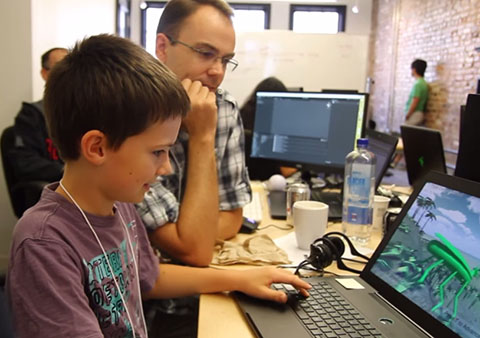
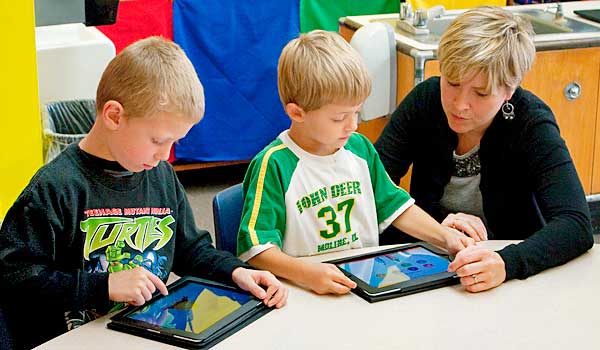
While research for games-based learning is growing, the understanding of game-based pedagogy is still relatively unknown. For example, what role does the teacher and student have in game-based activities. Kangas, Koskinen & Krokfors (2017) have discovered that the teacher guides, supports and scaffolds learning in gameplay. Students are guided to answer questions and discuss what they may be learning through the activities and specific questions can focus student’s attention on concepts they are working through.
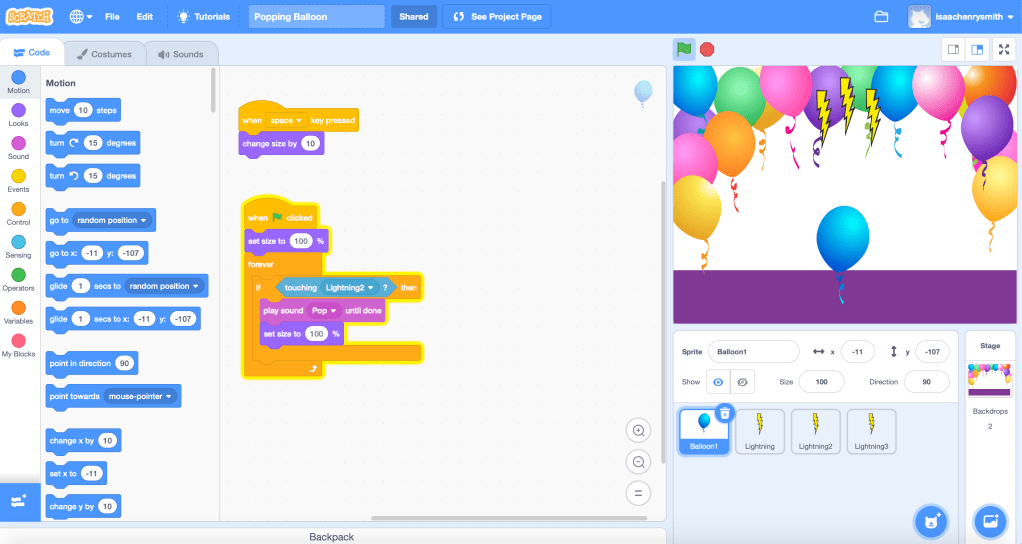
https://scratch.mit.edu/projects/393119317
Scratch is a great tool for game creation and helps tailor learning opportunities for individual student needs. While scratch is great for student learning, without explicit instruction, teachers may find the program difficult to follow and use productively. I have created a simple program for popping a balloon. However, without explicit instruction from the tutorial I would have gotten lost in the small details of scratch and where the icons and codes I needed were positioned.
Games are tools to help promote student-based learning. It is crucial that both teachers and students know their roles in order for games to be productive in a learning environment. While teachers are there to guide and assist, students need to use and develop their own skills to work through the activities. This also provides the opportunity for students to learn through failure. Games encourage resilience to students in a way that they may not see in normal learning environments.
References:
Kangas, M., Koskinen, A., & Krokfors, L. (2017). A qualitative literature review of educational games in the classroom: the teacher’s pedagogical activities. Teachers and Teaching, 23(4), 451-470.
Mayer, R. E. (2019). Computer games in education. Annual review of psychology, 70, 531-549.
 EDUC3620 Digital Creativity and Learning
Hi Isaac,
I really enjoyed reading over this blog and found it very engaging. I liked that you outlined the roles that both teachers and students have in games-based learning and also agree that both parties need to understand these before utilising it in the classroom.
I also believe that Scratch is a great tool for student learning and to foster creativity, and I found your creation of the popping balloon great!
Additionally, I loved your quote that the use of games to promote student-based learning “provides the opportunity for students to learn through failure”, I think it is becoming increasingly important to provide these opportunities in the classroom.
LikeLike